The History of Retail in 101 Objects

History of Retail in 101 Objects – Object 6: Shelf

Shelf · The History of Retail in 101 Objects

8000 to 2000 BC · Neolithic Shopper

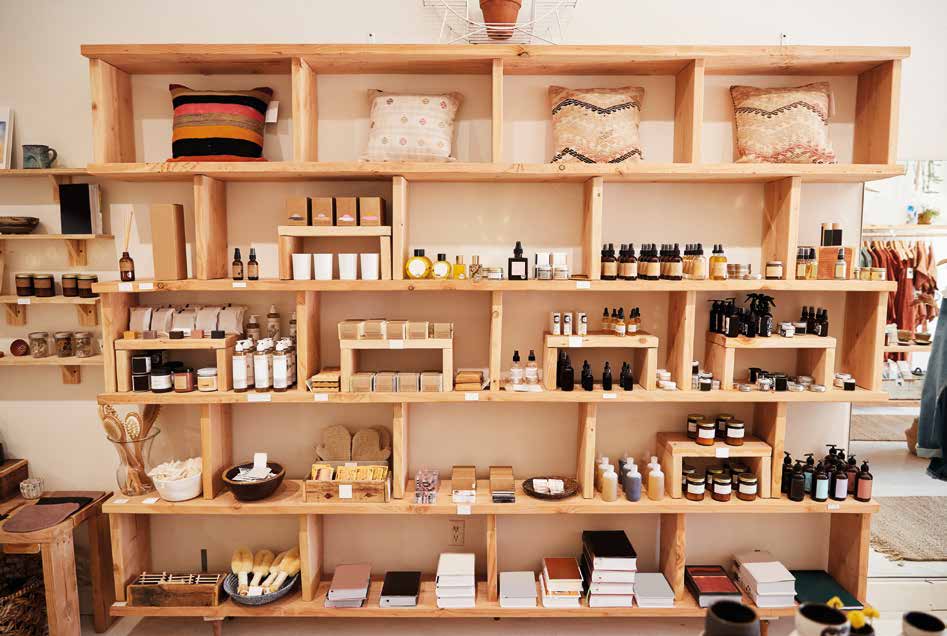
The shelf is a fundamental component of the store experience and allows retailers to display products and encourage sales, impart information and deliver promotional incentives. The type and quality of materials used in the fabrication of shelves contributes to perceptions of the retailer and the products offered for sale.

Shelves were created in ancient times out of a desire to elevate and protect valuable objects, which at the time tended to be scrolls or other types of written documents.

Advancements in printing which made the publication of books possible meant libraries needed extensive shelving for storage.

The application of shelves was readily apparent to retailers who equipped stores with horizontal surfaces to store products in back rooms and display products to customers so they could easily be retrieved by clerks.

The boom years for shelves arrived with the birth of self-service shopping in department stores in the 1800s and later in supermarkets. The new approach to retail meant shoppers needed to be able to see and touch products and shelves were the solution.

Shelving materials can consist of wood, metal, glass, plastic, stone or composite materials and come in an endless array of finishes. Shelves perform the most basic of functions within a retail environment, but the combination of materials, finishes and configurations present retailers with an infinite number of options when it comes to creatively merchandising a store.

In addition to their important contribution to merchandising, shelves play an important role in supply chain management. Different categories require specific shelving solutions which can vary widely from car batteries and cans of paint to folded shirts and delicate ceramics. Shelf design must account for the unique characteristics of each, to enable effective merchandising while providing adequate holding capacity to maintain acceptable in-stock levels based on anticipated rates of sale and the retailer's replenishment capabilities.

An amazing array of shelving is evident in the retail industry today.


Contribution to Retail History

The more products a buyer sees, the more a buyer buys. And throughout history, sellers realized this basic instinct of the retail process that they in turn would sell more products. While the shelf has evolved in terms of its material, size and configurations, and technological advancements, the fundamental purpose to maximize product assortments and sales hasn't changed. Stack it, show it, sell it is still the goal of visual merchandising and the overall store experience.

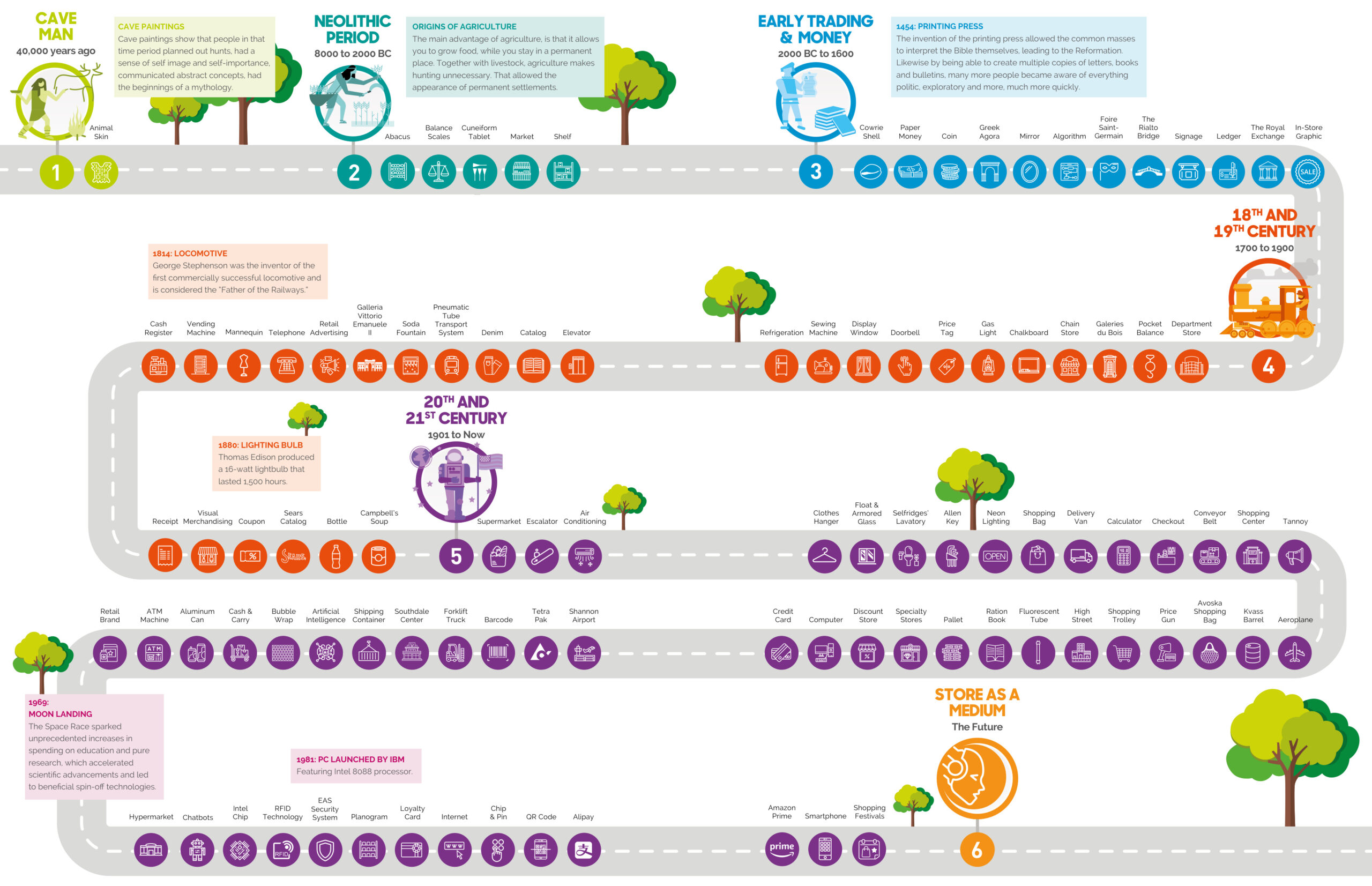
See where this object sits in the sweep of retail history →


About the series. The History of Retail in 101 Objects is compiled and edited by David Roth, CEO of The Store WPP and Chairman of WPP BAV. It tells the story of retail through the objects that shaped it, from the cave to the connected store, organised across the historical periods in which each innovation made its mark. As David puts it, the history of retail is the history of mankind, and of retail’s vast contribution to society. A new object appears here every Monday.

This is the fourth edition, the World Retail Hall of Fame edition. The book, and every object published so far →

History of Retail in 101 Objects – Object 5: Market

Market · The History of Retail in 101 Objects

8000 to 2000 BC · Neolithic Shopper

In China, every neighborhood has its own little vegetable and meat market, selling local produce. These Chinese markets are a focus of activity and noise, and modern Chinese supermarkets still reflect the look and feel of these original markets with stores housing 'mini' markets and stalls within them.

In Moscow, nearly 10 per cent of all retail trade takes place in markets and indeed markets continue to occupy a special place in the hearts and minds of Russian shoppers. About half of all clothes and shoes sold in Russia are bought at markets – the prices are cheaper and sometimes the goods are newer and more plentiful than in retail outlets. Although perishable goods are also offered, grocery retailing has expanded significantly to the extent that now only about 11 per cent of all food is sold at markets.

For centuries, across every part of India, weekly Haats or 'gatherings' would see vendors gathering in market places. As towns and cities grew, small retail stores began stocking more goods, and high street bazaars were formed where traders sold a range of goods, food, and perishables.

In 1869, the Mumbai Crawford Market could be said to be the first form of shopping center in India, then in 1874, the Hogg Market was opened in Calcutta. Now known as the New Market, it was designed by an East Indian Railways Architect, R.R. Bayne, and named after the municipal commissioner of Calcutta, Sir Stuart Hogg. The Hogg Market had a garden, a red brick Gothic clock tower and benches for shoppers to rest upon.

Just a few decades ago the majority of Indian shoppers still relied on street markets. But shopping traditions here are changing too. The street markets are still appreciated for their colorful displays and merchandise, but new shopping malls offering entertainment and experiences for all the family are also attracting many customers through their doors. Retailing is now the largest private industry in India and the second largest employer after agriculture.

Since ancient times and throughout the history of man, wherever roads intersected or throngs of people gathered, buyers and sellers, or peddlers, quickly created a centralized market for the exchange of goods and services. From the original souk or bazaar to flea markets to today's sophisticated urban town centers or mega malls, the market remains the center of trade and commerce, social interaction and personal satisfaction.


Contribution to Retail History

The principle of the market is as old as civilization itself. Markets and market places are still to be found everywhere, and each country has its own traditions and customs.

See where this object sits in the sweep of retail history →


About the series. The History of Retail in 101 Objects is compiled and edited by David Roth, CEO of The Store WPP and Chairman of WPP BAV. It tells the story of retail through the objects that shaped it, from the cave to the connected store, organised across the historical periods in which each innovation made its mark. As David puts it, the history of retail is the history of mankind, and of retail’s vast contribution to society. A new object appears here every Monday.

This is the fourth edition, the World Retail Hall of Fame edition. The book, and every object published so far →
History of Retail in 101 Objects – Object 4: Cuneiform Tablet

Cuneiform Tablet · The History of Retail in 101 Objects

8000 to 2000 BC · Neolithic Shopper

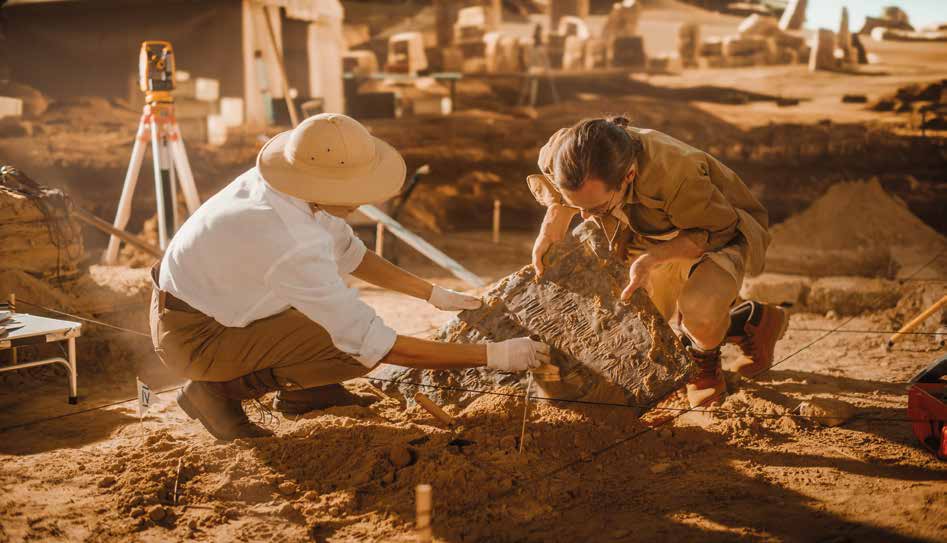
Civilization's need to write things down, make a list, keep a record, categorize data and thereby pay taxes, goes back to the earliest times. The first system of writing used to record this information (that is known to us) is called 'Cuneiform script'.

Cuneiform used pictorial symbols set out in columns on clay tablets, using a blunt reed for a stylus. The blunt reeds left a 'wedge shaped' impression, and this is where the name cuneiform comes from, the Latin for 'wedge'.

This writing system began in Sumer, in Mesopotamia, as long ago as 3300 BC. The early tablets were in their simplest form principally used for record keeping – agrarian inventories for grain, animals and equipment.

But as the ancient world increasingly urbanized, these writings took on a more commercial form and were employed to record bargains sealed, ships' cargoes, and lists of manufactured goods.

Early Sumerians used cuneiform to list the clay tokens they used to exchange and store their agricultural and manufactured goods. The clay tokens were put in clay containers and then impressed onto the sealed containers, one picture for each token inside the container. As time passed, it became a standard practice for the major cities to date documents by year, names, and their respective kings. It also became a way of calculating how much people should pay in taxes.

These early writings in turn led to their use for everyday purposes, not least in shopping. Dr Irvine Finkel, of the British Museum and noted Cuneiform scholar, has established that some of the earliest tablets he has examined are shopping lists!


Contribution to Retail History

Cuneiform tablets highlight our shopping journey from the ancient world to modern times. The shopping bag and the shopping list have survived the journey of time and civilizations. Both have been in use for millennia and whilst we have little evidence of an ancient bag, it is interesting to see from the many clay tablets that have survived, that the ancients wrote out their lists just as we do today.

See where this object sits in the sweep of retail history →


About the series. The History of Retail in 101 Objects is compiled and edited by David Roth, CEO of The Store WPP and Chairman of WPP BAV. It tells the story of retail through the objects that shaped it, from the cave to the connected store, organised across the historical periods in which each innovation made its mark. As David puts it, the history of retail is the history of mankind, and of retail’s vast contribution to society. A new object appears here every Monday.

This is the fourth edition, the World Retail Hall of Fame edition. The book, and every object published so far →
History of Retail in 101 Objects – Object 3: Balance Scales

Balance Scales - The History of Retail in 101 Objects

8000 to 2000 BC · Neolithic Shopper

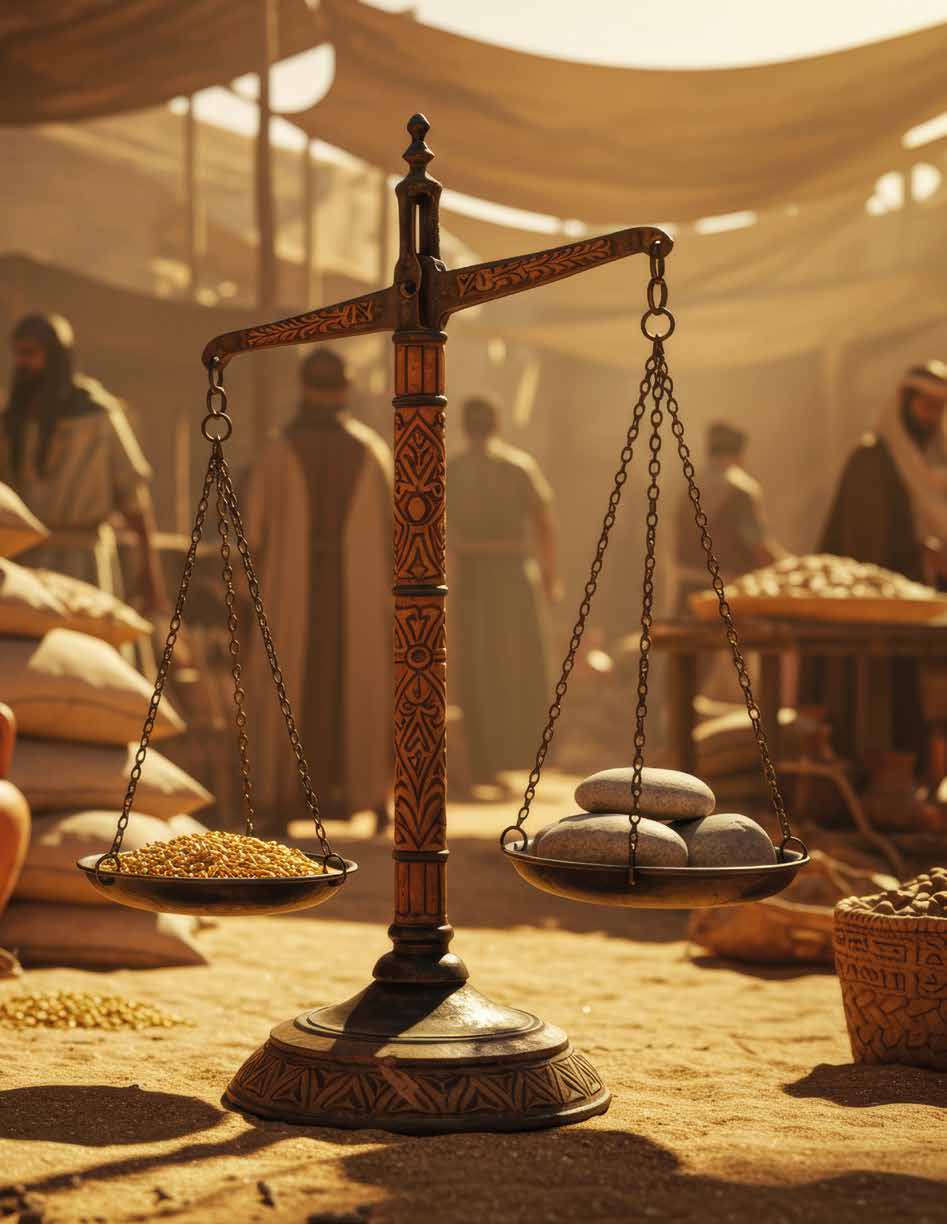
Balance scales were in use in Mesopotamia as early as around the year 4000 BC. They were probably derived from the principles of a yoke, whereby two equal weights would balance if suspended either side of a central beam.

Early balance scales measured relative weight (as opposed to actual weight). Measures were calculated by putting the object measured on one plate, and stones (the counterweight) on the other, until equilibrium was reached.

In around 1770, a way to measure absolute weight was developed by Richard Salter when he invented the spring scale. This calculated the weight of an item by measuring the pressure it registered when hung by a hook attached to the spring.

In 1897, one of the first commercial price-indicating scales was being developed in America. A weighed cursor, graduated vertically into prices per pound, was slid along a steelyard, which is a device with a short arm taking the item to be weighed, and a long graduated arm along which a weight is moved until it balances. The price of the goods could be read off the chart at the point where balance was achieved. Slow to actually provide a reading, it failed to catch on.

From the 1940s, scales were incorporating electronic devices to make them more accurate. Today, the traditional balance scales so associated with grocers, butchers, confectioners and a myriad of other retailers, have been replaced almost entirely by digital scales. These scales not only weigh to a tenth of a gram, but by communicating with the retailer's pricing system also print labels, instantly giving the weight and associated price of each weighed purchase. Scales are also integrated into supermarket checkouts, greatly streamlining the process.


Contribution to Retail History

Scales are one of civilizations most important developments. For centuries, traders have bought and sold goods according to weight and today all trade depends on having a fair system of weights and measures controlled by law. The food we eat and many of the products we use will have been weighed and measured – probably many times – in their journey through the supply chain. Without the ability to measure weight and ascribe a value to it, commerce would not have progressed beyond the basic bartering system. Thus, the scales became the principal way of determining the cost of an item, and a cornerstone of retailing as we know it.

See where this object sits in the sweep of retail history →


About the series. The History of Retail in 101 Objects is compiled and edited by David Roth, CEO of The Store WPP and Chairman of WPP BAV. It tells the story of retail through the objects that shaped it, from the cave to the connected store, organised across the historical periods in which each innovation made its mark. As David puts it, the history of retail is the history of mankind, and of retail’s vast contribution to society. A new object appears here every Monday.

This is the fourth edition, the World Retail Hall of Fame edition. The book, and every object published so far →

History of Retail in 101 Objects – Object 2: Abacus

Abacus - The History of Retail in 101 Objects

8000 to 2000 BC · Neolithic Shopper

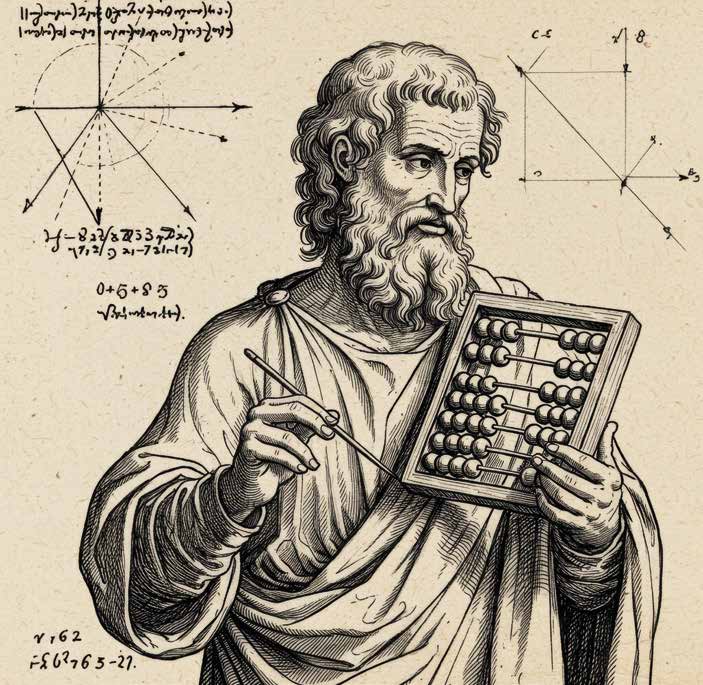
Traders have always needed counting boards of some kind. The earliest versions, which predated the abacus, would have been used by traders at markets. Traders drew lines in the sand with their fingers or a stylus of some kind. They would then place pebbles between those lines to represent numbers.

The Abacus – or counting frame – evolved from ancient times, through to the Middle Ages and Modern Times. In 500 BC the early counting boards included The Salamis Tablet, the Roman Calculi and the hand-abacus. The Roman hand abacus was often made from stone and metal.

In the Middle Ages came the Apices, the coin-board, and the line-board, which date from 5 AD to around 1400 AD.

Most were made from wood, and originally the beads on which you counted ran vertically. By the time the system had evolved to line-boards, the columns ran horizontally.

From 1200 AD the abacus evolved into the Chinese suan-pan, the Japanese soroban, and the Russian schoty. The classic Chinese abacus is the one we are most familiar with. It has two beads on the upper deck and five on the lower deck, and is often called the ‘2/5’ abacus. From about 1850 this was replaced with the ‘1/5’ abacus, with one bead on the top deck and five beads on the bottom deck.

The Chinese abacus was further adapted by Lee Kai-Chen, and by 1958 the ‘new’ abacus could be found in use, complete with an instruction book. It has more decks top and bottom combining the ‘1/4’ soroban model and the ‘2/5’ suan-pan style. Kai-Chen said it was a “Revolution of Chinese Calculators”.


Contribution to Retail History

The abacus, or beads on a board, provided an easier and more sophisticated retail transaction methodology and was actually the bridge from pebbles, twigs and lines in the sand to the first calculator. The abacus simplified the mathematical process for merchants and traders and was used for about 3,600 years until the first mechanical calculator appeared in 1642.

See where this object sits in the sweep of retail history →


About the series. The History of Retail in 101 Objects is compiled and edited by David Roth, CEO of The Store WPP and Chairman of WPP BAV. It tells the story of retail through the objects that shaped it, from the cave to the connected store, organised across the historical periods in which each innovation made its mark. As David puts it, the history of retail is the history of mankind, and of retail’s vast contribution to society. A new object appears here every Monday.

This is the fourth edition, the World Retail Hall of Fame edition. The book, and every object published so far →
History of Retail in 101 Objects – Object 1: Animal Skin

Animal Skin - The History of Retail in 101 Objects

Pre-History 40,000 Years Ago

Animal skins are used to create a wide range of consumer products today, but in earlier times they played a more vital role in the facilitation of commerce. Animal skins created great wealth and fuelled the development and growth of one of the world's greatest retailers and most recognizable luxury brands.

Mankind has made extensive use of animal skins throughout history for all manner of clothing and shelter and to create a wide range of products. Animal skins were essential for much of man's existence and very survival which in turn made them extremely valuable to early peoples. Animal skins often served as a form of crude currency that could be exchanged for other goods. In some cases, animal skins such as deer hide were refined into a type of currency that preceded the development of paper money.

Over time, the utility of animal skins as a form of currency waned, but they gained greater relevance to society as symbols of wealth and status and a raw material for mass-produced consumer goods. New processes and manufacturing techniques allowed animal skins to be transformed into a wide range of consumer products prized for their durability, texture and versatility. Animal skins also fueled the development of global luxury brands for which manufacturers were able to command premium prices.

Animal skins long ago ceased playing a role as an instrument of trade or currency, but they remain highly prized throughout the world – so much so that extreme measures are now taken to protect select species threatened with extinction.

Advancements in the development of synthetic animal hides have made them indistinguishable from the real thing and a viable alternative in many cases.


Contribution to Retail History

As an early form of crude currency, animal skins were vital to man's existence and evolved to become a status symbol as well as a raw material for various goods. The harvesting of animal skins, also known as the fur trade, became a lucrative business across continents and also led to the formation of the Hudson's Bay Company in 1670. By the mid-19th century, Hudson's Bay, which controlled fur trading for centuries, amassed vast wealth and transitioned into retail business eventually becoming one of the largest and most influential retail business.

See where this object sits in the sweep of retail history →


About the series. The History of Retail in 101 Objects is compiled and edited by David Roth, CEO of The Store WPP and Chairman of WPP BAV. It tells the story of retail through the objects that shaped it, from the cave to the connected store, organised across the historical periods in which each innovation made its mark. As David puts it, the history of retail is the history of mankind, and of retail’s vast contribution to society. A new object appears here every Monday.

This is the fourth edition, the World Retail Hall of Fame edition. The book, and every object published so far →