
1000 BC
Paper currency, which was first developed by the Chinese during the Tang Dynasty in the 7th century, marked the beginning of simplifying the payment process and making it easier, less cumbersome, and far more dependable. Produced primarily from cotton, paper money also contributed to the expansion of trade among regions and territories. With 180 recognized currencies worldwide today, paper money has recently given way to electronic transactions and the future will be greatly influenced by various digital crypto currencies.
In the 13th century, when Genghis Khan conquered China, he quickly grasped the potential of its paper money and began using it as a currency throughout his empire. He seized people's existing supplies of gold and silver and gave them paper currency in exchange, leaving the population no option but to trade with paper money.
Although the use of paper money spread and continued for several hundred years, it was not wholeheartedly embraced. In Persia, its introduction in 1294 led to a complete collapse of trade. In the 15th century in China, the issuing of paper notes was mismanaged, leading to rapid depreciation of their value and causing inflation. As a consequence, the use of paper money in China ceased in 1455 and did not resume for many years.
Europe came far behind Asia and the Arab world in its adoption of paper money, primarily because Europe didn't have paper until around 1100 AD. The alleged first instance of the use of paper money in Europe was in Spain in 1438 during a Moorish invasion (a Spanish military leader paid his soldiers with paper).
Early on in the introduction of paper money, European governments took over its production and began printing 'official' paper money. These paper receipts were all given fixed values and people began leaving their heavy coins with merchants in exchange for them. The earliest known English goldsmith certificates were being used by 1633 as proof of ability to pay.
Nations and colonies developed their own paper money, leading to the variety of notes in use today. In 1816, governments established the 'gold standard', to ward against inflation. This tied the value of paper money to a specific amount of gold, held in the government treasuries. The US officially adopted the gold standard in 1900.
Today, not all notes are widely accepted and the average lifespan for a currency's circulation is only 39 years. The longest running paper currencies are the British pound, (introduced in 1694) and the US dollar (introduced in 1792).
Contribution to Retail History
The earliest paper money was used in China around 1000 BC and it was most commonly used as a letter of credit, transferred over large distances.
See where this object sits in the sweep of retail history →
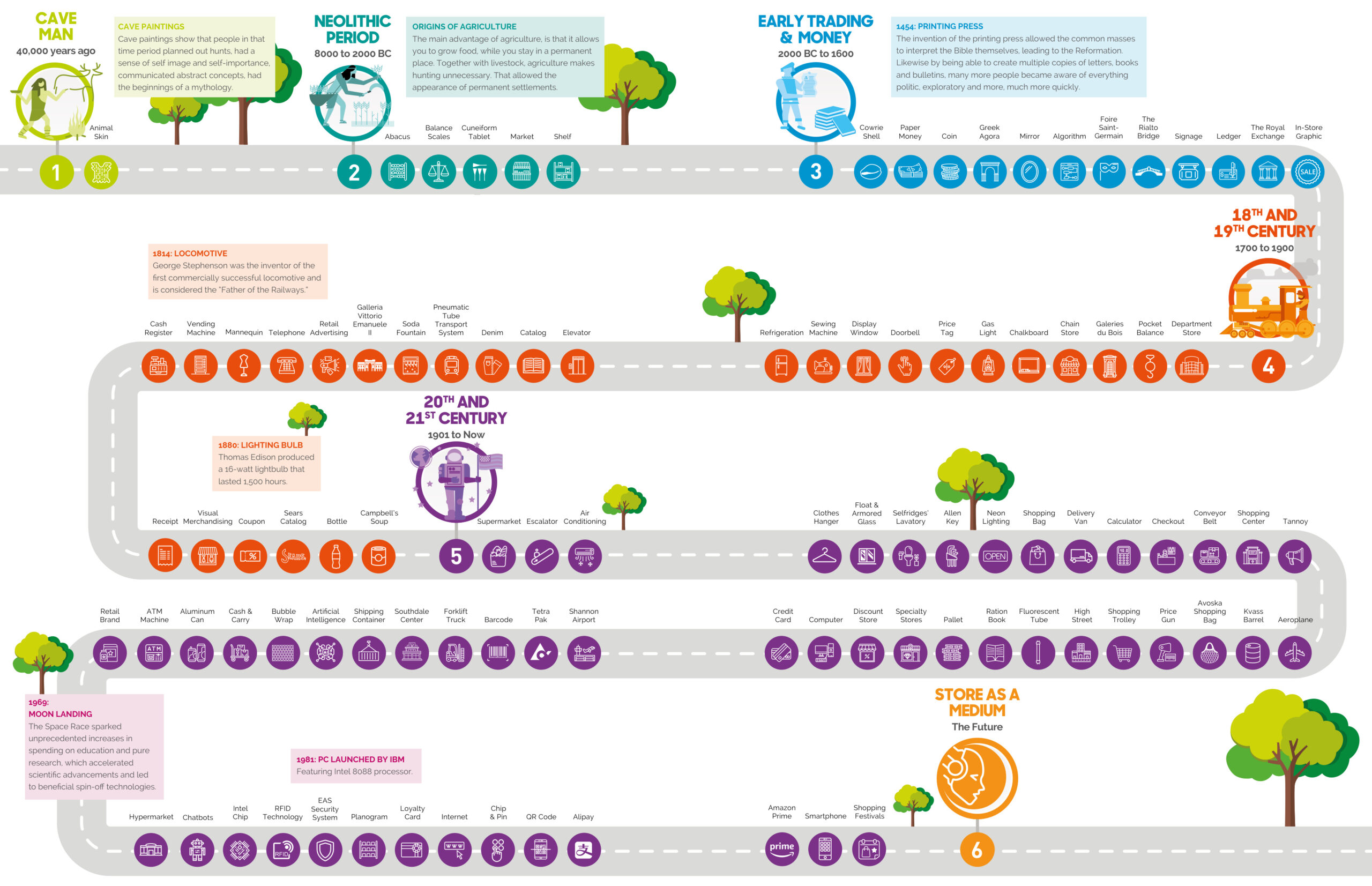
About the series. The History of Retail in 101 Objects is compiled and edited by David Roth, CEO of The Store WPP and Chairman of WPP BAV. It tells the story of retail through the objects that shaped it, from the cave to the connected store, organised across the historical periods in which each innovation made its mark. As David puts it, the history of retail is the history of mankind, and of retail’s vast contribution to society. A new object appears here every Monday.
This is the fourth edition, the World Retail Hall of Fame edition. The book, and every object published so far →