8000 to 2000 BC · Neolithic Shopper
Civilization's need to write things down, make a list, keep a record, categorize data and thereby pay taxes, goes back to the earliest times. The first system of writing used to record this information (that is known to us) is called 'Cuneiform script'.
Cuneiform used pictorial symbols set out in columns on clay tablets, using a blunt reed for a stylus. The blunt reeds left a 'wedge shaped' impression, and this is where the name cuneiform comes from, the Latin for 'wedge'.
This writing system began in Sumer, in Mesopotamia, as long ago as 3300 BC. The early tablets were in their simplest form principally used for record keeping – agrarian inventories for grain, animals and equipment.
But as the ancient world increasingly urbanized, these writings took on a more commercial form and were employed to record bargains sealed, ships' cargoes, and lists of manufactured goods.
Early Sumerians used cuneiform to list the clay tokens they used to exchange and store their agricultural and manufactured goods. The clay tokens were put in clay containers and then impressed onto the sealed containers, one picture for each token inside the container. As time passed, it became a standard practice for the major cities to date documents by year, names, and their respective kings. It also became a way of calculating how much people should pay in taxes.
These early writings in turn led to their use for everyday purposes, not least in shopping. Dr Irvine Finkel, of the British Museum and noted Cuneiform scholar, has established that some of the earliest tablets he has examined are shopping lists!
Contribution to Retail History
Cuneiform tablets highlight our shopping journey from the ancient world to modern times. The shopping bag and the shopping list have survived the journey of time and civilizations. Both have been in use for millennia and whilst we have little evidence of an ancient bag, it is interesting to see from the many clay tablets that have survived, that the ancients wrote out their lists just as we do today.
See where this object sits in the sweep of retail history →
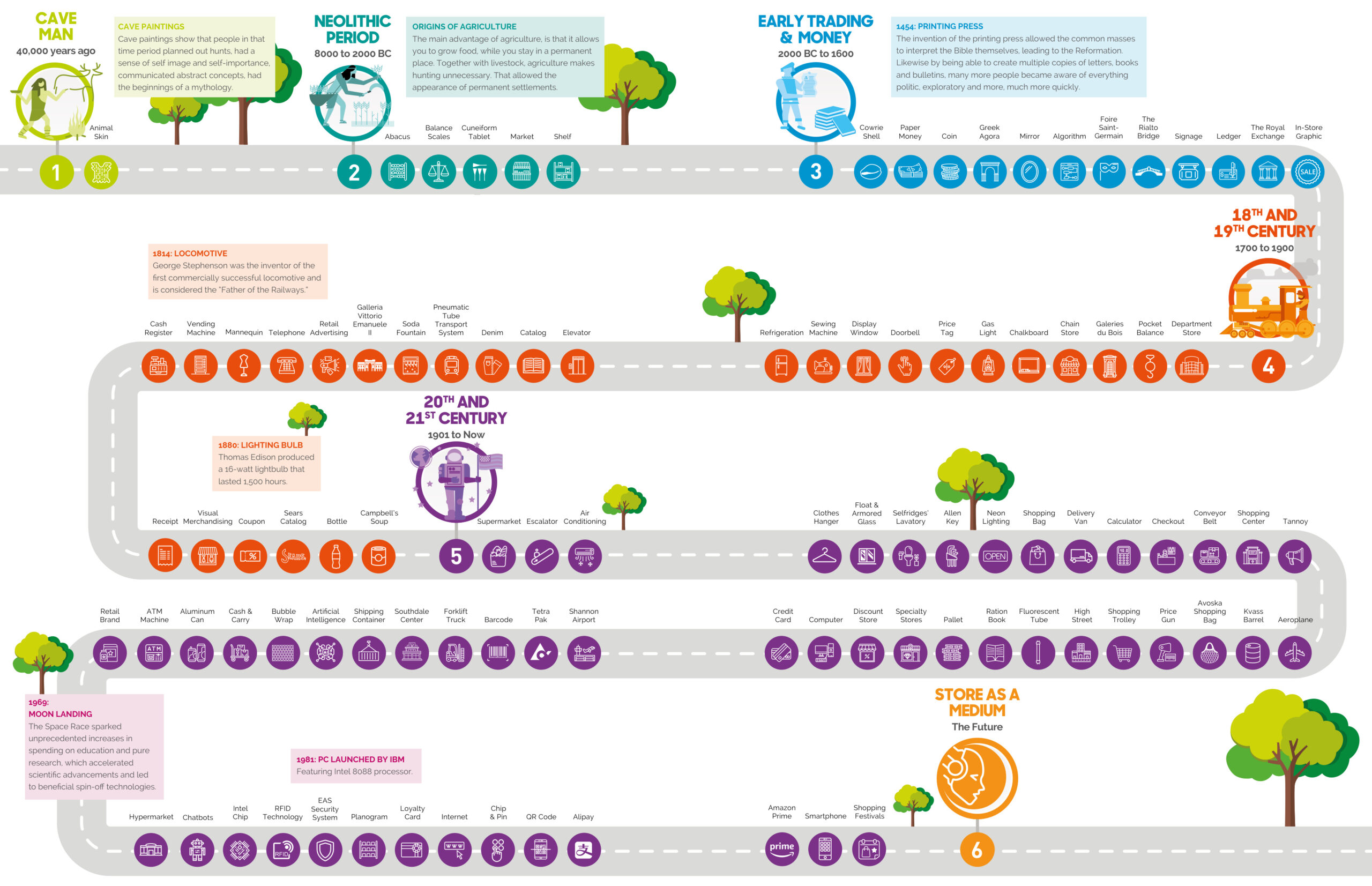
About the series. The History of Retail in 101 Objects is compiled and edited by David Roth, CEO of The Store WPP and Chairman of WPP BAV. It tells the story of retail through the objects that shaped it, from the cave to the connected store, organised across the historical periods in which each innovation made its mark. As David puts it, the history of retail is the history of mankind, and of retail’s vast contribution to society. A new object appears here every Monday.
This is the fourth edition, the World Retail Hall of Fame edition. The book, and every object published so far →