
BYD drew a robot. The drawing you should study is the dealership floor.

BYD filed a design patent this week, and the drawing matters less than where BYD says the robot will go.

On 9 October, China’s National Intellectual Property Administration published an “Embodied AI Robot” design patent with BYD as the holder, according to CarNewsChina and Star News Korea. The drawings show a black-and-white humanoid with a rounded, screenless head and jointed torso, arms and legs, designed to walk, balance and interact with people. It looks very like “Xiao Di”, a robot a BYD executive teased on social media earlier this year. Figures disclosed earlier put Xiao Di at 1.61 metres and 58.5 kilos, with 31 degrees of freedom and a hand accurate to plus or minus one millimetre. BYD has not confirmed that the patent shows the production model.

Most carmakers now have a humanoid in a slide deck. BYD has also said where its one will work. According to CarNewsChina, its executives plan to deploy these robots across the company’s own dealership network, to greet customers, explain the cars and demonstrate the in-car infotainment. They are meant for the showroom, not the factory.

That makes this a retail story. For twenty years the dealership has been the weak link for premium car brands. Service varies from one site to the next, and a carefully built brand can be undersold by whoever happens to be on the floor that Saturday. BYD wants to automate the one role no carmaker has ever controlled: a salesperson who never has an off day, never improvises the pitch, never forgets the script, and demonstrates the infotainment the same way in Shenzhen as in Stuttgart. The robot is the headline. The bigger change is brand control reaching the last metre of the sale, the one part the brand has never owned.

China matters here because of how BYD builds. It is the world’s largest integrated maker of electric vehicles, and it is making this robot the way it makes everything else: in-house, at scale and from its own parts. It set up a dedicated robotics team in 2022, invested in AgiBot in 2023 and took a stake in Percibot in 2025. It has also been running Ubtech’s Walker S1 inside its own Changsha plant to collect operating data. BYD already makes the batteries, motors and actuators and runs the factory floor, so the robot is simply the next product down the same line. A Western carmaker partners with a robotics firm and negotiates over the margin. BYD owns both sides of that deal, and Western boards keep underestimating what that is worth.

There is reason for caution. A design patent is a drawing. There is no price, no reliability data and no deployment date, and Xiao Di may never get beyond the teaser video. A hand accurate to a millimetre still has to survive a showroom full of children and spilled coffee. So far BYD has shown renders and no revenue, and scepticism is fair.

The intent is still clear. BYD wants to know whether a humanoid can be the brand’s own face in the room where the sale happens. That is a far more commercial question than whether one can work in a warehouse, and almost no Western retailer or carmaker is seriously asking it yet.

What to watch. See whether BYD puts one of these robots on a dealership floor before it puts one in a factory. The order of deployment will show what BYD thinks the robot is for. If customers meet it first, BYD is selling brand control rather than cost savings, and that is the version retail executives should worry about.

The Roth Read. Picture the robot on your own shop floor, in your uniform, saying your words every time, without fail. BYD has said its humanoid belongs where the customer decides, in the showroom. If your brand still treats the last metre of the sale as somebody else’s problem, BYD is about to show you what that assumption costs.

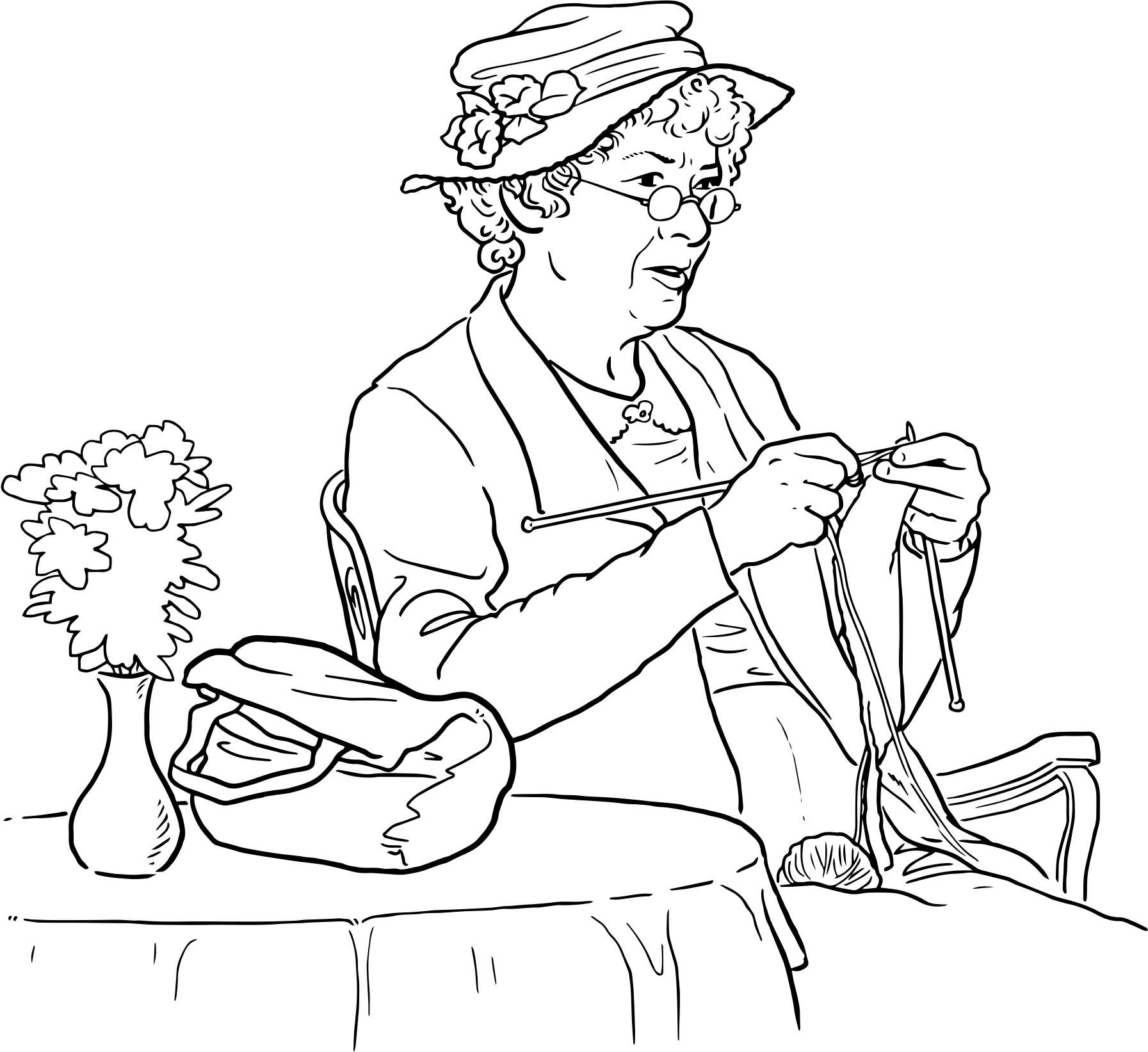
Agatha Christie, by Lucy Clayton

Agatha Christie, drawn for Brand Stories from Brand Champions

Lucy Clayton on Agatha Christie. One of 121 stories from Brand Stories from Brand Champions, which I devised and curated for The Store, WPP.

I love Agatha Christie.

Not because she is the bestselling novelist of all time (only Shakespeare & The Bible beat her for readership and I confess I am rather less familiar with those works) but because her stories are told and retold today with as much enthusiasm as when she first wrote them. The constant adaptations give a freshness to the tales but it is their familiarity that gives them longevity; the comfort of repetition. I've loved them since childhood, spending many hours replaying audiobooks on tape until the sound started to hiss with stretching. And nothing soothes a hangover like an early 90s ITV Poirot you've seen a hundred times before. I'm not sure I've ever seen the end of a Poirot, I tend to fall asleep somewhere in the middle so to be honest I never really know whodunnit. I love that her work is constantly being repackaged , from beautiful reissued books to lavish Hollywood movies. The same stories dusted off and given a new lease of life. As period pieces, they allow us to enjoy the eternal appeal of art deco; everything is so refined and gilded and precise, even while there's claret splattered all over the walls. I've always thought Miss Marple is a fashion icon. No one does knitwear like her. Geraldine McEwan's wardrobe is my favorite, she had the most flair – lots of lace collars and layering.

We think of authors as brands quite naturally these days, we know modern writers must do the rounds of the literary festivals and public speaking, we expect perfect Instagramming to accompany each new publication. But Agatha Christie was better than that, bashing out novels while starring in her own (unsolved) mystery in her personal life. Her shocking eleven-day disappearance made the front page of the New York Times and Conan Doyle took one of her gloves to a medium to try and solve the thing. We don't know if it was a stunt but if it was it was genius.

It was after visiting Mrs Christie in 1934, at Exeter St David's station bookstall, that Allen Lane came up with the idea for good books at a price everyone could afford, going on to democratize literary fiction and start a paperback revolution with Penguin Books. Perhaps her legacy is far greater than simply the gentle art of murder.


Lucy Clayton
Lucy is CEO of Community Clothing, a social enterprise with a mission to sustain and create jobs in the UK textile and garment manufacturing industry, where many of the workforce are at risk from the closure of factories. Together with Founder, British Fashion Designer Patrick Grant, Lucy has focused on delivering the company’s social impact, collaborating with organisations working with the long-term unemployed. So far the brand has created over 11,000 hours of skilled working hours in UK factories. Lucy’s career began at a fashion startup in New York and has taken her on a diverse journey from the pages of The Lady Magazine to the Playboy Mansion. Before Community Clothing, Lucy was a Board Director at J. Walter Thompson, running the Graduate Recruitment and Training programme and working with Rimmel London, Warehouse, Glamour Magazine Coty Fragrances, HSBC, Pfizer & Unilever. Passionate about discovering and mentoring talent, Lucy regularly gives talks in schools and colleges. She is part of the charity “Speakers 4 Schools” a committed network of leading figures who want to give back to young people in state schools. She regularly speaks on industry trends at events including WGSN, AdWeek Europe, The Crowd, Fashion Revolution Open Studio Week etc. She is number 22 in the Financial Times and HERoes inaugural list of top 50 Women Role Models in Business, 2017.


There are 120 more. Brand Stories from Brand Champions collects 121 people writing about the one brand that shaped them. Amazon UK · Amazon US. The full index is at www.davidroth.com/brand-stories/stories/.

History of Retail in 101 Objects – Object 8: Paper Money

Paper Money · The History of Retail in 101 Objects

1000 BC

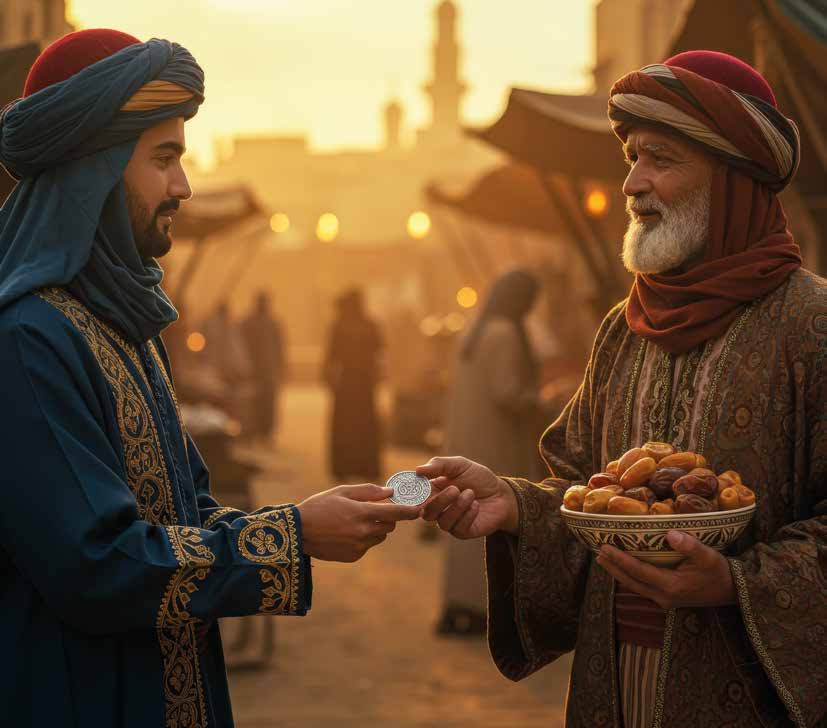
Paper currency, which was first developed by the Chinese during the Tang Dynasty in the 7th century, marked the beginning of simplifying the payment process and making it easier, less cumbersome, and far more dependable. Produced primarily from cotton, paper money also contributed to the expansion of trade among regions and territories. With 180 recognized currencies worldwide today, paper money has recently given way to electronic transactions and the future will be greatly influenced by various digital crypto currencies.

In the 13th century, when Genghis Khan conquered China, he quickly grasped the potential of its paper money and began using it as a currency throughout his empire. He seized people's existing supplies of gold and silver and gave them paper currency in exchange, leaving the population no option but to trade with paper money.

Although the use of paper money spread and continued for several hundred years, it was not wholeheartedly embraced. In Persia, its introduction in 1294 led to a complete collapse of trade. In the 15th century in China, the issuing of paper notes was mismanaged, leading to rapid depreciation of their value and causing inflation. As a consequence, the use of paper money in China ceased in 1455 and did not resume for many years.

Europe came far behind Asia and the Arab world in its adoption of paper money, primarily because Europe didn't have paper until around 1100 AD. The alleged first instance of the use of paper money in Europe was in Spain in 1438 during a Moorish invasion (a Spanish military leader paid his soldiers with paper).

Early on in the introduction of paper money, European governments took over its production and began printing 'official' paper money. These paper receipts were all given fixed values and people began leaving their heavy coins with merchants in exchange for them. The earliest known English goldsmith certificates were being used by 1633 as proof of ability to pay.

Nations and colonies developed their own paper money, leading to the variety of notes in use today. In 1816, governments established the 'gold standard', to ward against inflation. This tied the value of paper money to a specific amount of gold, held in the government treasuries. The US officially adopted the gold standard in 1900.

Today, not all notes are widely accepted and the average lifespan for a currency's circulation is only 39 years. The longest running paper currencies are the British pound, (introduced in 1694) and the US dollar (introduced in 1792).


Contribution to Retail History

The earliest paper money was used in China around 1000 BC and it was most commonly used as a letter of credit, transferred over large distances.

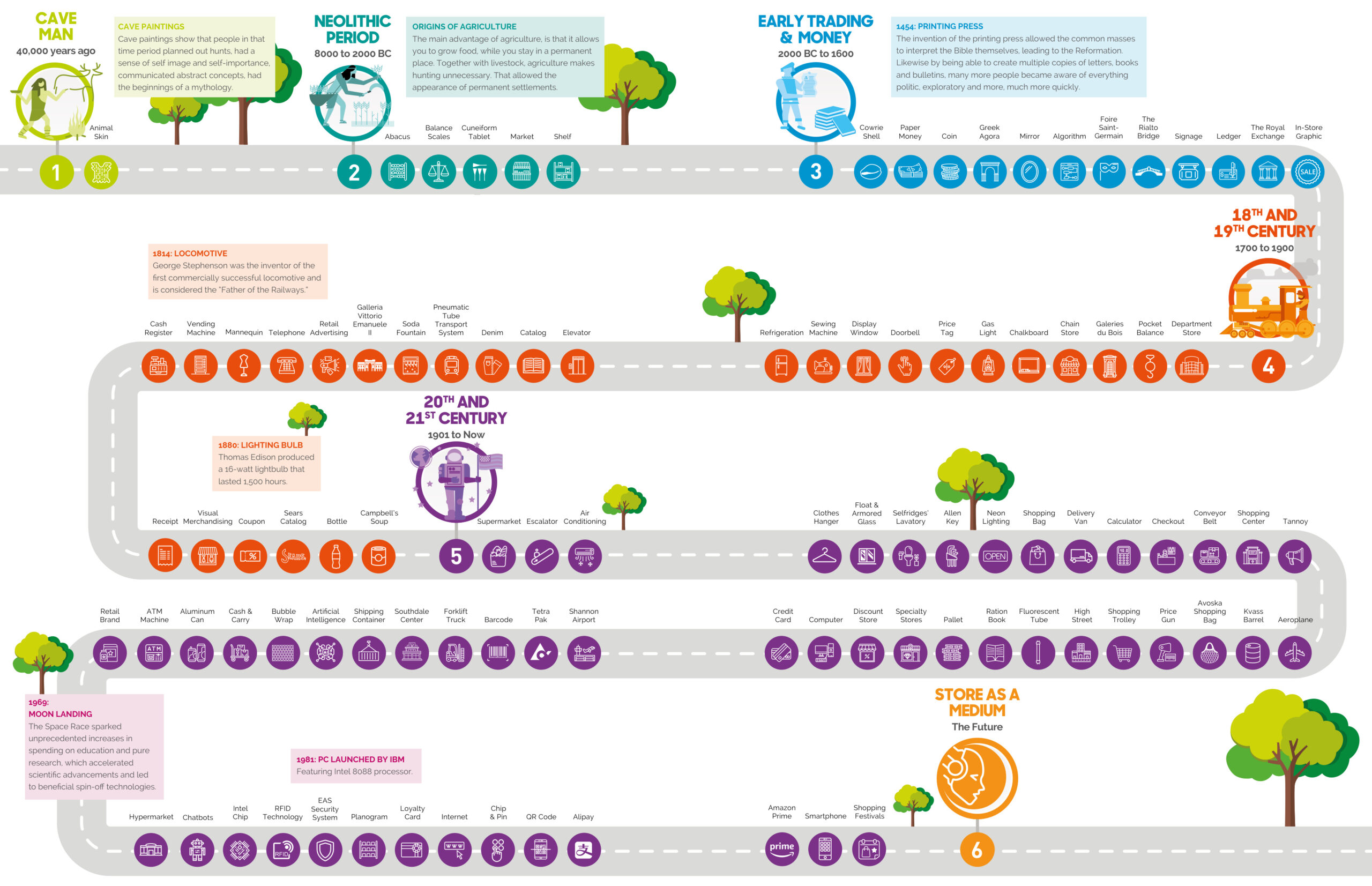
See where this object sits in the sweep of retail history →


About the series. The History of Retail in 101 Objects is compiled and edited by David Roth, CEO of The Store WPP and Chairman of WPP BAV. It tells the story of retail through the objects that shaped it, from the cave to the connected store, organised across the historical periods in which each innovation made its mark. As David puts it, the history of retail is the history of mankind, and of retail’s vast contribution to society. A new object appears here every Monday.

This is the fourth edition, the World Retail Hall of Fame edition. The book, and every object published so far →
In Conversation: Parag Parekh, Ingka Group | IKEA

The Shopper No Longer Wants a Bed. They Want Better Sleep.

Parag Parekh, Chief Digital Officer, Ingka Group | IKEA · recorded at the World Retail Congress, Berlin 2026.

Customers have stopped asking for a bed. They are asking for better sleep. They have stopped asking for a sofa. They are asking someone to help set up the living room. That shift, small in words, enormous in consequence, is the one Parag Parekh kept returning to.

Parekh is Chief Digital Officer of Ingka Group, the largest IKEA franchisee, steering a digital operation he describes as six or seven years young inside an 80 year old business. Late to digital, and he says so plainly.

What he does not do is pretend the playground is infinite. When product teams had autonomy and agility but no clear business owner and no idea whether a project sat in the top ten or top thirty priorities, IKEA built a retail investment council to rank and stack every request against top line or cost. Discipline, not enthusiasm. He is candid about what is not cracked: warehouse software still running on Pascal from the 1980s, creative production still largely outsourced, HR and finance foundations unbuilt. The wins are specific. A customer service chatbot, Billy, absorbs repetitive intents so co-workers can be moved to room design sessions that were rationed by cost per room. Free the hours, democratise the service.

Here is what a brand owner should take. Parekh anchors every digital decision to what IKEA means: trust, comfort, a data promise made before a single digital product shipped. The technologist guards the brand, not the marketing department alone.

The Roth Read. If agentic commerce means shoppers describe a room and not a product, then your catalogue is no longer the asset · the solution is. Ask yourself whether an agent, given a messy hallway, would surface your brand or route straight past it. The retailers who win this dance are the ones whose trust transfers into the machine, and IKEA started building that promise before it built the ecosystem.

David Roth In Conversation is a series of conversations with the leaders shaping the future of retail, recorded at the World Retail Congress, Berlin 2026 in association with the World Retail Congress. A new conversation is published every Friday.

History of Retail in 101 Objects – Object 7: Cowrie Shell

Cowrie Shell · The History of Retail in 101 Objects

1200 BC

In the earliest civilizations the concept of ‘trading’ was well established, but there was no equivalent to money for use in such transactions.

To get your food you would ‘barter’ an item such as fish, fur, clothes, decorative items, tools or even weapons. From 9000 to 6000 BC the nearest equivalent to currency was cattle.

Archaeological evidence suggests that the first widespread form of currency was introduced around 1200 BC, through the adoption of the cowrie shell as a trading ‘token’. These shells shared many of the attributes of modern coins – being durable, portable, easily recognizable and hard to fake. As well as being counted out in payment, they could also be traded by weight.

The cowrie shell was indigenous to the Indian and Pacific Oceans, but its use as a trading token spread and it became the most commonly used means of payment across large parts of Asia, Africa, and some of the outer reaches of Europe. The significance of shell trading in China is evidenced by ancient artefacts that show simplified representations of the cowrie used as part of the characters for words with economic meaning – such as money, coin and buy.

Just as with currency exchanges today, the value of the cowrie shell could fluctuate, depending on where it was being traded. For example, in some places a few cowries would buy a cow; whereas in the Maldives (where cowrie shell collecting and trading was a big business), several hundred thousands of cowries would be required in exchange for a single gold dinar.

The Portuguese, English, French and Dutch played a significant role in promoting the cowrie as a currency for commercial transactions, including using it for trading in slaves. In Western Africa, ‘shell money’ remained legal tender right up until the mid 19th century.


Contribution to Retail History

As the first recognized ‘common currency’, the cowrie shell played a vital contribution to the development of commerce and early formal retail. Non-perishable, lightweight and robust, it opened up international trade opportunities by enabling transactions to be carried out across continents and between different cultures.

See where this object sits in the sweep of retail history →


About the series. The History of Retail in 101 Objects is compiled and edited by David Roth, CEO of The Store WPP and Chairman of WPP BAV. It tells the story of retail through the objects that shaped it, from the cave to the connected store, organised across the historical periods in which each innovation made its mark. As David puts it, the history of retail is the history of mankind, and of retail’s vast contribution to society. A new object appears here every Monday.

This is the fourth edition, the World Retail Hall of Fame edition. The book, and every object published so far →

In Conversation: Nail Valley, Youzu

Most Retailers Are Bolting AI On. The Real Work Sits in the Catalogue

Nail Valley, Co-founder, Youzu · recorded at the World Retail Congress, Berlin 2026.

Ask most e-commerce leaders about AI and they will point you to a shopping assistant plugged in through an API. Nail Valley thinks that is the easy trick, and the wrong place to start. The real work sits underneath, in the catalogue nobody has bothered to understand.

Nail is co-founder of Youzu, which he describes as an “intelligence layer for e-commerces and marketplaces.” His argument is that most sites talk about adoption while doing the shallow version: “just, you know, kind of using API solutions that’s connecting to LLMs, which is quite simplistic.”

His case has two floors. The foundation is product data, catalogues and SKUs, enriched and normalised by embedding both text and visual data so the machine actually understands what is on the shelf. On top of that sits visual AI: computer vision models that let a shopper search by image, a Google Lens experience most retailers have seen at the big platforms and almost none can offer themselves. “99% of e-commerce do not have that.” He is candid, too, about what is coming: AI-generated content so realistic that within a year or two you will struggle to tell it from a photograph, with humans left to moderate rather than make.

Here is my read. The seductive part of AI is the shopper-facing layer, the chat window, the clever demo. The unglamorous part is knowing your own images and video well enough that a machine can too. One is a feature. The other is a foundation. Skip the foundation and the feature sits on sand.

The Roth Read. Before you buy another shopping assistant, ask a harder question: does your business actually understand its own catalogue, image by image? If the answer is no, you are decorating a house with no floor. Nail’s five-year warning is blunt, and you should take it as a deadline, not a mood.

David Roth In Conversation is a series of conversations with the leaders shaping the future of retail, recorded at the World Retail Congress, Berlin 2026 in association with the World Retail Congress. A new conversation is published every Friday.

Adnams, by David Boynton

Adnams, drawn for Brand Stories from Brand Champions

David Boynton on Adnams. One of 121 stories from Brand Stories from Brand Champions, which I devised and curated for The Store, WPP.

Years ago, when I was a very young man, there was a TV program on about wine from Italy, and there was a guy on it called Simon Loftus, who was the wine buyer for Adnams. They're a small, regional brewer in Suffolk, and I'd never heard of them. I was interested in wine so I sent off for their wine list, and this was back in the days when the wine list was typed on a piece of A4 with corrections in Tipp-Ex. It was fearsomely expensive and I lived in a tiny flat in Leytonstone so couldn't afford to buy anything, but along with the list they sent me publicity material about their hotels, The Swan and The Crown. I thought they looked lovely and hoped that one day I'd be able to go there.

I was living with my girlfriend at the time and decided it would be quite nice to get married to her, so I booked a mini-break at the Swan in Southwold. Obviously, it's quite a nerve-wracking experience asking someone to marry you, so I went to the bar and had several pints of Broadside, which was Adnams' winter ale at the time, so I could pluck up the courage. I did the deed and she said yes, and we've stayed connected to Adnams ever since.

We moved to Suffolk full time in 2006, and Adnams is the brand that first introduced us to that part of the world. I have a deep love of Suffolk , the landscape, the skies, the whole aesthetic feel of the place just really suits me. We go to Southwold regularly, and I still buy all my wine from Adnams.

I think those guys do an extraordinary job of branding. There's something about the sense of place, the romantic Edwardian image of Southwold, the lighthouse and all of that, they do that beautifully. They know who they are and who their customer is, and the executions are lovely, inspiring and just right for that brand. It's had an emotional place in my heart and has been in and around my life for about 30 years. It's a brand that's helped me get married, for crying out loud!

It's amazing that 30 years later they still have such a clear sense of themselves, there's this continuity and uniqueness about them which I suppose goes back to the place that they come form and the fact it's a well-understood, well- executed brand. I'm still married to my wife, Jacqui, after 27 years and we have four children. The power of Broadside!


David Boynton

David Boynton
David Boynton is CEO of iconic British brand The Body Shop, where he has responsibility for the company’s business strategy, execution and growth in more than 65 markets worldwide. He took the role in December 2017 following the acquisition of The Body Shop by Brazil’s best-known beauty brand, and sustainability leader, Natura Cosmeticos. David previously held senior positions at a number of major high-street retailers, most recently as CEO of menswear retailer Charles Tyrwhitt. He was also formerly at natural beauty brand L’Occitane for 10 years, his last role at the group being Chief Executive of the US region, where he was operationally responsible for a geographically diverse group of over 600 boutiques. He has also held a number of senior management roles across Asian markets. David has over 22 years’ experience in the retail sector and has expertise spanning operations, real estate, e-commerce and CRM, brand-building, operational marketing and sales development. He is passionate about unearthing talent, driving positive change and building businesses.


There are 120 more. Brand Stories from Brand Champions collects 121 people writing about the one brand that shaped them. Amazon UK · Amazon US. The full index is at www.davidroth.com/brand-stories/stories/.

History of Retail in 101 Objects – Object 6: Shelf

Shelf · The History of Retail in 101 Objects

8000 to 2000 BC · Neolithic Shopper

The shelf is a fundamental component of the store experience and allows retailers to display products and encourage sales, impart information and deliver promotional incentives. The type and quality of materials used in the fabrication of shelves contributes to perceptions of the retailer and the products offered for sale.

Shelves were created in ancient times out of a desire to elevate and protect valuable objects, which at the time tended to be scrolls or other types of written documents.

Advancements in printing which made the publication of books possible meant libraries needed extensive shelving for storage.

The application of shelves was readily apparent to retailers who equipped stores with horizontal surfaces to store products in back rooms and display products to customers so they could easily be retrieved by clerks.

The boom years for shelves arrived with the birth of self-service shopping in department stores in the 1800s and later in supermarkets. The new approach to retail meant shoppers needed to be able to see and touch products and shelves were the solution.

Shelving materials can consist of wood, metal, glass, plastic, stone or composite materials and come in an endless array of finishes. Shelves perform the most basic of functions within a retail environment, but the combination of materials, finishes and configurations present retailers with an infinite number of options when it comes to creatively merchandising a store.

In addition to their important contribution to merchandising, shelves play an important role in supply chain management. Different categories require specific shelving solutions which can vary widely from car batteries and cans of paint to folded shirts and delicate ceramics. Shelf design must account for the unique characteristics of each, to enable effective merchandising while providing adequate holding capacity to maintain acceptable in-stock levels based on anticipated rates of sale and the retailer's replenishment capabilities.

An amazing array of shelving is evident in the retail industry today.


Contribution to Retail History

The more products a buyer sees, the more a buyer buys. And throughout history, sellers realized this basic instinct of the retail process that they in turn would sell more products. While the shelf has evolved in terms of its material, size and configurations, and technological advancements, the fundamental purpose to maximize product assortments and sales hasn't changed. Stack it, show it, sell it is still the goal of visual merchandising and the overall store experience.

See where this object sits in the sweep of retail history →


About the series. The History of Retail in 101 Objects is compiled and edited by David Roth, CEO of The Store WPP and Chairman of WPP BAV. It tells the story of retail through the objects that shaped it, from the cave to the connected store, organised across the historical periods in which each innovation made its mark. As David puts it, the history of retail is the history of mankind, and of retail’s vast contribution to society. A new object appears here every Monday.

This is the fourth edition, the World Retail Hall of Fame edition. The book, and every object published so far →
In Conversation: Clare Waight Keller, Uniqlo

The Designer Who Doesn't Google

Clare Waight Keller, Creative Director, Uniqlo · recorded at the World Retail Congress, Berlin 2026.

Ask the creative director of one of the world’s largest clothing retailers what tools she uses to read a technology-soaked market, and the answer stops you: “For me, I don’t use anything.” No Pinterest, no Instagram search, no algorithm. Two months of doing the research herself, by eye and by instinct.

Clare Waight Keller is Creative Director of Uniqlo, arriving there after a career at the top of luxury. She now designs clothes worn head to toe in the queue at the airport rather than admired from a distance.

Her case is that the thing that matters most in design is the thing a machine cannot yet do. Separating a five-minute trend from a lasting one, she says, comes down to one discipline: “You have to watch it.” It is gut, honed over decades, and so far at Uniqlo it has played out well. The rest is process. A design goes through six months of refinement, fabric, quality control, touch point after touch point, until it becomes, in her words, “the perfect Uniqlo product.” And the reach is deliberately broad: democratic sizing, tropical buys for Southeast Asia, specific product for Muslim countries, Canada bought differently from the Philippines. One brand, many climates.

What should a retailer take from this? That the most defensible thing you own may be the least automatable. Anyone can scrape a feed. Almost no one can stand in the culture for two months and know, by feel, what will last. The instinct is the moat.

The Roth Read. If your trend forecasting is now a dashboard anyone can buy, you have bought your competitors the same edge you have. Waight Keller’s advantage is that she does the looking herself, and looking is expensive, slow and hard to copy. Ask whether you have outsourced the one judgement you should have kept.

David Roth In Conversation is a series of conversations with the leaders shaping the future of retail, recorded at the World Retail Congress, Berlin 2026 in association with the World Retail Congress. A new conversation is published every Friday.

In Conversation: Steph McGovern

You Will Not Be Replaced by AI · You Will Be Replaced by Someone Who Uses It

Steph McGovern, Broadcaster and Presenter · recorded at the World Retail Congress, Berlin 2026.

Business as usual is over. What we have now, Steph McGovern told the room on the first morning in Berlin, is business as unusual, and we have simply got used to it.

McGovern is a broadcaster and journalist who now also runs a retail business of her own, Gootopia, a slime and experience venture that grew from six units to fifteen in a year. She is not talking about retail from the stalls. She is on the pitch.

Her read on the day was sharp. Homogeneity is a death sentence: “if you’re homogeneous you’re not going to survive.” The customer is now dictating, not being told. And the thing that holds it all together is not agility for its own sake but storytelling anchored to truth, whether you are Tendam’s Juan describing a tsunami rather than a wave, or Zalando’s David Schneider recalling flip-flops sold from a basement twenty years before the platform reached sixty million customers. On AI she was refreshingly unmystical. She uses it to trace a sales dip to the exact moment a new hire started, to write bedtime stories with a witch’s dragon from next door, and she has her elderly neighbour on Claude booking hospital taxis. Find your problem first, she says, then use the tool. Do not use it for the sake of it.

What matters here for any brand owner is the reframing of AI as an enabler of humanity, not a replacement for it. People are never offline, so they crave the analogue. Slime and dine. Something to touch.

The Roth Read. McGovern’s warning is the one to pin above your desk: you will not be replaced by AI, you will be replaced by someone who uses it. Stop admiring the technology and start naming the problem it solves for your customer. If you cannot, someone hungrier already has.

David Roth In Conversation is a series of conversations with the leaders shaping the future of retail, recorded at the World Retail Congress, Berlin 2026 in association with the World Retail Congress. A new conversation is published every Friday.