
8000 to 2000 BC · Neolithic Shopper
In China, every neighborhood has its own little vegetable and meat market, selling local produce. These Chinese markets are a focus of activity and noise, and modern Chinese supermarkets still reflect the look and feel of these original markets with stores housing 'mini' markets and stalls within them.
In Moscow, nearly 10 per cent of all retail trade takes place in markets and indeed markets continue to occupy a special place in the hearts and minds of Russian shoppers. About half of all clothes and shoes sold in Russia are bought at markets – the prices are cheaper and sometimes the goods are newer and more plentiful than in retail outlets. Although perishable goods are also offered, grocery retailing has expanded significantly to the extent that now only about 11 per cent of all food is sold at markets.
For centuries, across every part of India, weekly Haats or 'gatherings' would see vendors gathering in market places. As towns and cities grew, small retail stores began stocking more goods, and high street bazaars were formed where traders sold a range of goods, food, and perishables.
In 1869, the Mumbai Crawford Market could be said to be the first form of shopping center in India, then in 1874, the Hogg Market was opened in Calcutta. Now known as the New Market, it was designed by an East Indian Railways Architect, R.R. Bayne, and named after the municipal commissioner of Calcutta, Sir Stuart Hogg. The Hogg Market had a garden, a red brick Gothic clock tower and benches for shoppers to rest upon.
Just a few decades ago the majority of Indian shoppers still relied on street markets. But shopping traditions here are changing too. The street markets are still appreciated for their colorful displays and merchandise, but new shopping malls offering entertainment and experiences for all the family are also attracting many customers through their doors. Retailing is now the largest private industry in India and the second largest employer after agriculture.
Since ancient times and throughout the history of man, wherever roads intersected or throngs of people gathered, buyers and sellers, or peddlers, quickly created a centralized market for the exchange of goods and services. From the original souk or bazaar to flea markets to today's sophisticated urban town centers or mega malls, the market remains the center of trade and commerce, social interaction and personal satisfaction.
Contribution to Retail History
The principle of the market is as old as civilization itself. Markets and market places are still to be found everywhere, and each country has its own traditions and customs.
See where this object sits in the sweep of retail history →
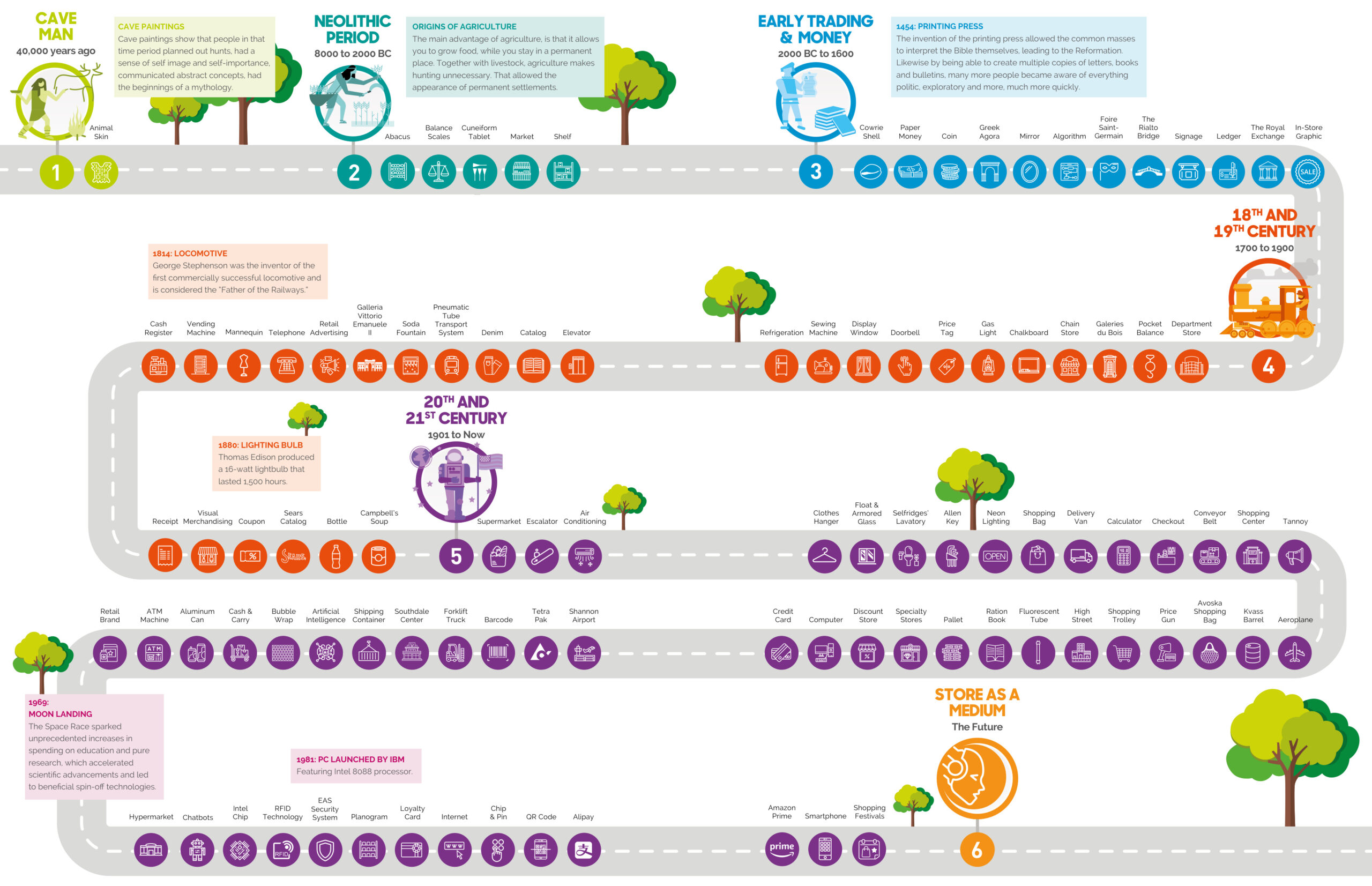
About the series. The History of Retail in 101 Objects is compiled and edited by David Roth, CEO of The Store WPP and Chairman of WPP BAV. It tells the story of retail through the objects that shaped it, from the cave to the connected store, organised across the historical periods in which each innovation made its mark. As David puts it, the history of retail is the history of mankind, and of retail’s vast contribution to society. A new object appears here every Monday.
This is the fourth edition, the World Retail Hall of Fame edition. The book, and every object published so far →